CICC General Assembly: Towards Better Governance of the Cocoa Sector in Cameroon
By GOLDEN BEANS · 2 October 2026 · 3 min read
CICC General Assembly: Towards Better Governance of the Cocoa Sector in Cameroon
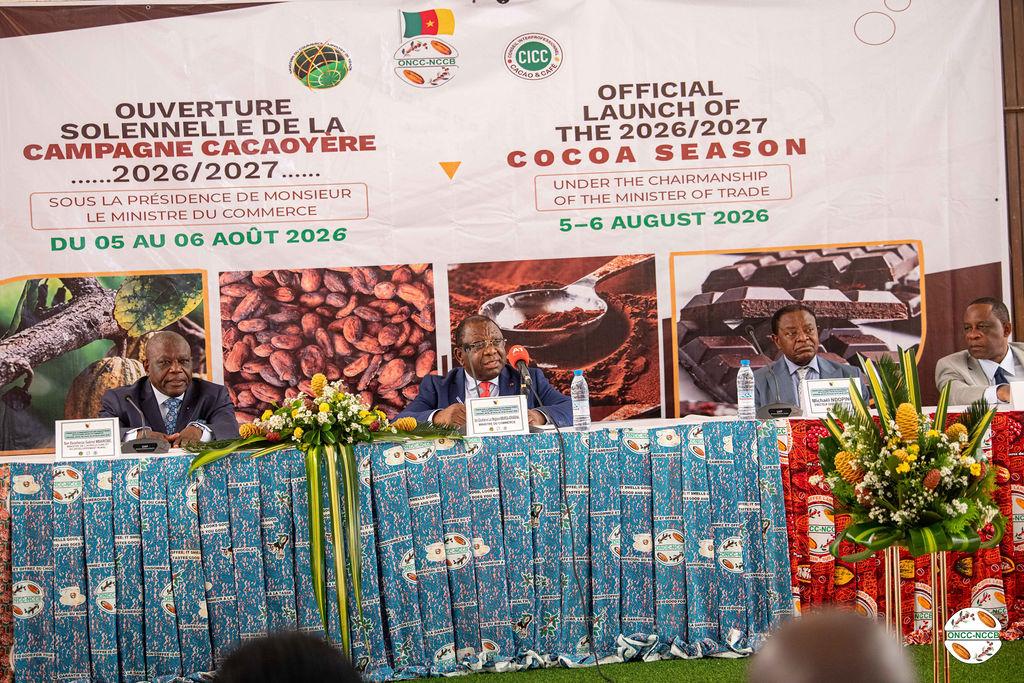
The General Assembly of the Interprofessional Council of Cocoa and Coffee (CICC) was recently held, highlighting the governance challenges facing the cocoa sector in Cameroon. This meeting emphasized the importance of a collaborative approach to improve transparency and traceability in cocoa production, especially in the context of new European regulations on deforestation (source: mincommerce.gov.cm).

Participants discussed strategies to strengthen Cameroon’s position in the international market, particularly by aligning with sustainability standards demanded by European consumers. The need for better remuneration for producers was also a central point of discussion, with proposals aimed at establishing fair prices for cocoa beans.
Cocoa and Coffee Prices in Cameroon
According to the latest data from the ONCC, cocoa prices in Cameroon for October 1, 2026, are as follows: 3,083 FCFA/kg CIF and 3,007 FCFA/kg FOB. For coffee, the prices are 3,621 FCFA/kg for Arabica and 2,001 FCFA/kg for Robusta (source: ONCC).
Market Context in West Africa
The cocoa sector in West Africa, particularly in Cameroon, is undergoing significant changes. Producers are facing increasingly strict requirements regarding sustainability and traceability. Small producers, in particular, express concerns about new European requirements that could impact their market access (source: Business in Cameroon).
Cocoa Derivatives
Regarding cocoa derivatives, the demand for cocoa butter and cocoa mass remains strong, with growth prospects in international markets. Processors are looking to optimize their processes to meet this growing demand while adhering to sustainability standards (source: Confectionery News).
EUDR Regulation
Cameroon continues to prepare for the requirements of the EU Deforestation Regulation (EUDR), although full compliance remains a challenge. Discussions around the implementation of this regulation are essential to ensure that Cameroonian products have access to European markets, which require deforestation-free supply chains (source: Commission EUDR).
In conclusion, the CICC General Assembly not only highlighted the current challenges facing the cocoa sector in Cameroon but also opened pathways for better governance and greater sustainability, which are essential for the future of Cameroonian cocoa in the international market.
Get the daily market brief
Cocoa, coffee and EUDR insights in your inbox.
→ Get the daily market brief